RV Roof Waterproofing — Coat It or Replace It?
A factory RV roof is a sheet of EPDM, TPO, or fiberglass held down at the edges and cut open at every penetration. Alasta Seal replaces that assembly with a fully bonded polyurea membrane — no laps, no termination bar, no sealant to age out. Over 7001 Primer, which is the reason it holds on rubber where other coatings do not.
Get a Roof AssessmentWhat Is Actually Wrong With a Factory RV Roof
It Is Held On at the Edges
A single-ply RV roof is a sheet rolled over the deck, glued in places, and clamped under a termination bar and drip rail at the perimeter. Wind, age, and adhesive failure produce the bubbling and lifting that owners notice at year ten. Alasta Seal is fully bonded across 100% of the deck — there is no unadhered area to lift.
Every Penetration Is a Cut Sheet Plus Caulk
The membrane is cut open at each vent, fan, AC, and skylight, then a metal flange is screwed through it and the whole thing is bridged with lap sealant. That sealant, not the membrane, is what fails — and it fails on a three-to-five year schedule.
EPDM Sheds Itself
The white chalk that runs down your sidewalls after rain is plasticizer leaving the rubber. That is the membrane thinning, going harder and less flexible each season. It is also the exact contamination that makes most roof coatings fail on EPDM — which is why prep and primer are not optional here.
A Recoat Beats a Replacement on Cost and Time
A full roof replacement means stripping to the deck, replacing wet decking, and reinstalling every rooftop component. A polyurea recoat over a sound deck is a one-to-two day job with no exposure. The deciding factor is whether the decking underneath is dry — and that is a question with a definite answer.
Roof Types & Roof Details
Every membrane type takes the system. What changes is the prep — and the details are the same on all of them.
- EPDM rubber roofs
- TPO membrane roofs
- One-piece fiberglass roofs
- Aluminum & ribbed metal roofs
- Previously coated roofs
- Vent, fan & AC flanges
- Skylight & hatch curbs
- Front & rear cap roof transitions
- Termination bars & drip rails
- Solar, antenna & rack mounts
Recoat or Replace — How to Decide
Four checks, in order. Any one of them can send you to a replacement instead.
Know What Is On Your Roof Before You Buy Anything
Half the bad advice on RV roofs comes from people applying an EPDM answer to a TPO roof or a fiberglass answer to aluminum. Identify the membrane first — it takes thirty seconds.
EPDM. Black or dark gray, slightly soft under a fingernail, and it leaves white chalk on your finger. If white streaks run down your sidewalls after rain, it is EPDM and it is shedding plasticizer.
TPO. Bright white, firm, slick, and does not chalk. Newer units and most towables built in the last decade. Welded seams rather than glued.
Fiberglass. Hard, glossy, one continuous piece with no seams at all in the field. Common on higher-end coaches and fifth wheels. Feels like a boat hull because it is made like one.
Aluminum. Ribbed or flat metal, usually riveted, on older units and some truck campers.
All four take the same product. What changes is how hard you have to work before you spray it — and that is where most coating failures come from.
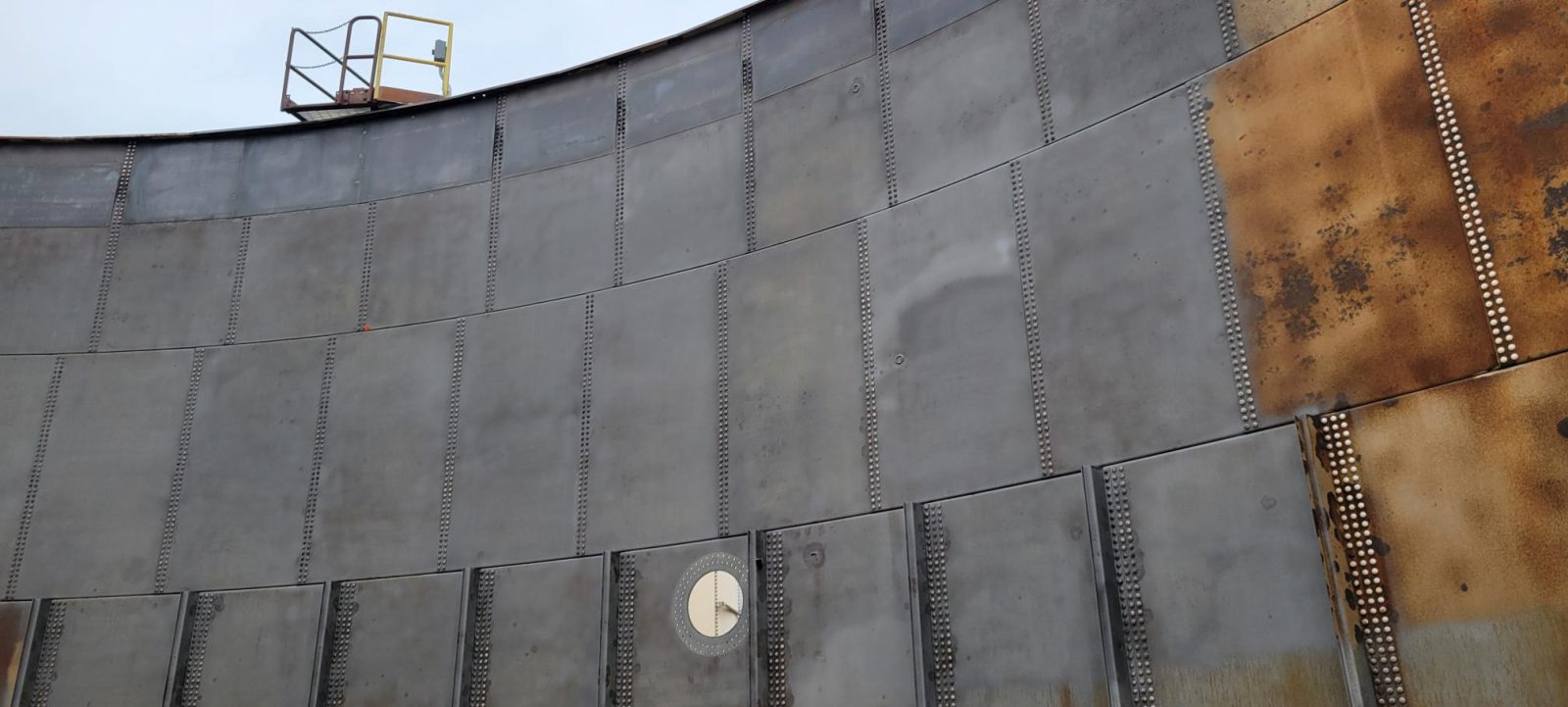
Recoat vs. Replace
Why 7001 Primer Matters More on a Roof Than Anywhere Else
On blasted steel, a good polyurea will bond without help. On an RV roof it will not, and the reason is worth understanding before you skip a step to save an hour.
EPDM is a plasticized rubber. Those plasticizers migrate to the surface continuously as the sheet ages — that is what the chalk is. Spray a membrane directly onto it and you have bonded to a layer that is actively leaving. Worse, the plasticizer keeps migrating into the new coating and softens it from below.
TPO is engineered to be non-stick. Thermoplastic polyolefin has a low surface energy by design — it sheds dirt, which also means it sheds coatings. Nothing bonds to clean TPO without a primer that chemically bridges it.
Fiberglass carries mold-release wax from the day it left the mold, and gelcoat gloss gives a coating nothing mechanical to grab.
7001 solves all three. It is a quick-set multi-surface adhesion primer that bonds to membranes, metals, and composites alike, and it blocks bleed-through so nothing from the old surface migrates up into the new one. On a roof that changes substrate four times between the front cap and the rear, it is also what makes the finished membrane continuous rather than a series of patches.
RV Roof Projects
Not Sure Whether Yours Is a Recoat or a Replacement?
Walk the deck, meter the ceiling, and send us what you find along with the membrane type and roof dimensions. We will give you a straight answer and, if it is a recoat, a spec and a material takeoff.
Get a Roof AssessmentGet a Roof Assessment
Tell us about your project and we will follow up with product details, technical data sheets, and pricing.
Frequently Asked Questions
Frequently Asked Questions
Everything people ask before committing to a roof.
Recoat or Replace
How do I know if my roof can be coated instead of replaced?
Walk the whole deck. Any soft, spongy, or dished area means wet or rotted decking underneath, and that is a replacement. Then meter the interior ceiling panels against a known-dry area. If the deck is firm everywhere and the meter reads dry, you are a recoat candidate. Widespread membrane delamination or a tear over wet decking sends you to replacement regardless.
My roof has bubbles and lifted areas. Is that disqualifying?
Not necessarily. Small lifted areas mean the adhesive released locally — those can be cut, re-bonded to the deck, and coated over. Widespread lifting across large portions of the roof means the sheet is done and should come off. The test is whether the deck underneath is sound and dry, not whether the sheet is stuck.
Is a coating a shortcut compared to a real replacement?
It is a different assembly, not a lesser one. A replacement gives you a new 45-mil single-ply sheet with the same termination bar, the same cut-and-caulk penetrations, and the same three-to-five year sealant maintenance. A fully bonded 40–60 mil polyurea membrane has none of those. On a sound deck it is the better roof, not the cheaper compromise.
How long does a recoat take?
One to two days depending on unit size and how much old sealant has to be removed. Prep is the long part; spray time on a towable roof is under an hour. The membrane is tack-free within a minute and the unit can go back outside the same afternoon.
Membrane-Specific Questions
Can you really coat over EPDM given how much it chalks?
Yes, and the chalk is exactly why the prep is what it is. Two passes with Super Orange Cleaner and a rinse between removes the migrated plasticizer, and the water-sheet test verifies it — if water beads anywhere, that area is not clean yet. Then 7001 Primer bonds to the rubber and blocks any further plasticizer migration into the new membrane. Skip either step and the coating fails; do both and it holds.
Do I really need primer on TPO? It looks perfectly clean.
Clean TPO is the problem. Thermoplastic polyolefin has an intentionally low surface energy — it is engineered to be non-stick so it stays white. There is nothing for a coating to bond to chemically or mechanically without a primer that bridges it. This is the one substrate where we will not spec the system without 7001.
My fiberglass roof has no seams. Why would I coat it?
Because the field of the roof was never the problem. A fiberglass roof still has a screwed-through metal flange at every vent, fan, and AC, each sealed with the same lap sealant on the same three-to-five year clock. Add gelcoat crazing with age and rigid-deck stress concentration at the cap transitions and you have the same leak list as everyone else.
Can it go over a roof I already coated with a liquid product?
Test it first. Work a putty knife under an edge and pull. If the old coating holds, clean, scuff, and prime over it. If it lifts in sheets, it all has to come off. Silicone-based roof coatings are the frequent problem case — silicone sheds subsequent coatings almost by definition.
Performance & Practicalities
What about water that ponds behind the AC?
Not an issue. The membrane is fully adhered with no seams and is not breathable, so standing water has nowhere to go but evaporate. Ponding becomes a dirt and debris question rather than a leak question. This is a meaningful difference from a single-ply roof, where a lap in a ponding area is a genuine risk.
Will hail damage it?
A 40–60 mil elastomeric membrane with 300–400% elongation absorbs impact rather than fracturing. Hail may dent the deck underneath; the membrane stretches over the deformation and stays watertight. Rigid coatings crack at the edge of the dent, which is where they then leak.
How much material will my roof need?
One gallon yields 1,604 mil-sq-ft at 100% solids — roughly 32 sq ft at 50 mil. A 200 sq ft towable roof runs 7–8 gallons for the field, plus material for the 80-mil build at every flange, cap transition, and termination. Send us length and width and we will do the takeoff.
Can I apply it myself?
Alasta Seal requires a plural-component proportioner with heated hose — Graco Reactor E-20/E-30 class or equivalent. It is not a roll-on or brush product, and it cannot be applied with an airless sprayer. If you do not have a rig we can refer you to an applicator or a mobile tech in your area.
Something Specific to Your Roof?
Send photos and dimensions. We will tell you what you have and what it needs.
Ask a Question